 Storm Work
Underrated Things to Bring on Storm
On storm, everybody packs rain gear, a phone charger, underwear(I hope) and a cooler full of beer. The items below are the ones guys wish they'd brought on day five, when nothing has dried, the power's still out and the paycheck hasn't been checked once.
Storm work means 16-hour days, rain that doesn't quit and staging sites or hotels with no guarantee of power. Small prep makes a two or three week storm a lot more bearable.
Boot dryer
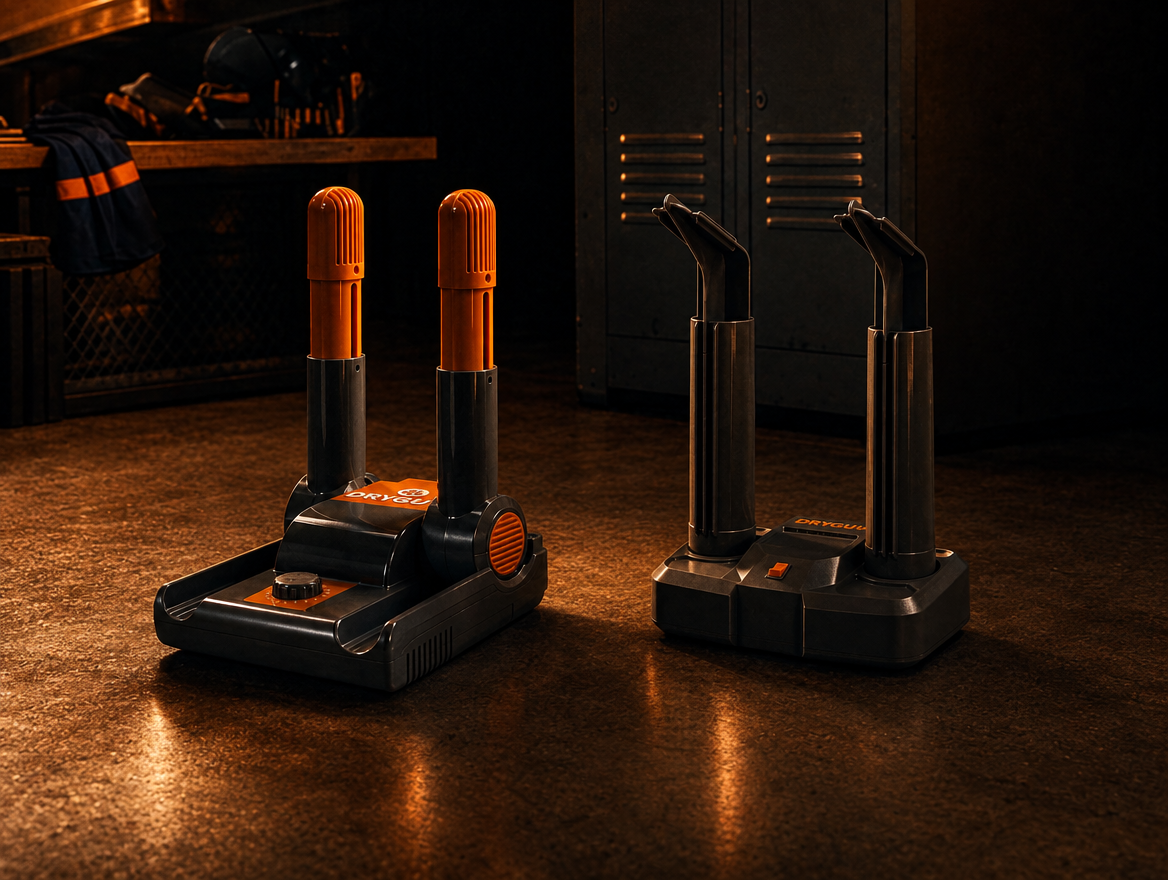
DRYGUY BOOT DRYER
Wet boots are the fastest way to start off a storm on the wrong foot. Soaked leather can take a day or two to air dry, and on storm you get maybe six hours between shifts. Without a dryer, you'll be pulling on the same wet boots in morning.
Why it matters
Your feet. Days in wet boots soften the skin until it cracks, blisters and splits. Keep it up and you're looking at immersion foot (trench foot) or a fungal infection that follows you home. You might think you're tough, but you ain't tougher than trench foot.
Your boots. A 300–500 pair of lineman boots left damp in a humid truck or a sealed bag can grow mold and start breaking down. A dryer protects the investment.
Your sleep. Cold, wet feet at 5 a.m. make a 16 feel like a 20.
How to use it on storm
Pull the insoles and dry them separately. They hold a surprising amount of water.
Use a low-heat or air-only setting on leather. High heat dries leather out and cracks it.
Run it overnight every night, even if the boots "feel fine."
If power at the hotel or staging site is unreliable, a 12V model that plugs into the truck is worth having as a backup.
Pair it with a second pair of boots if you can, and pack more socks than you think you need. Wool or synthetic, not cotton.
Pelican 1556 Air case, or similar
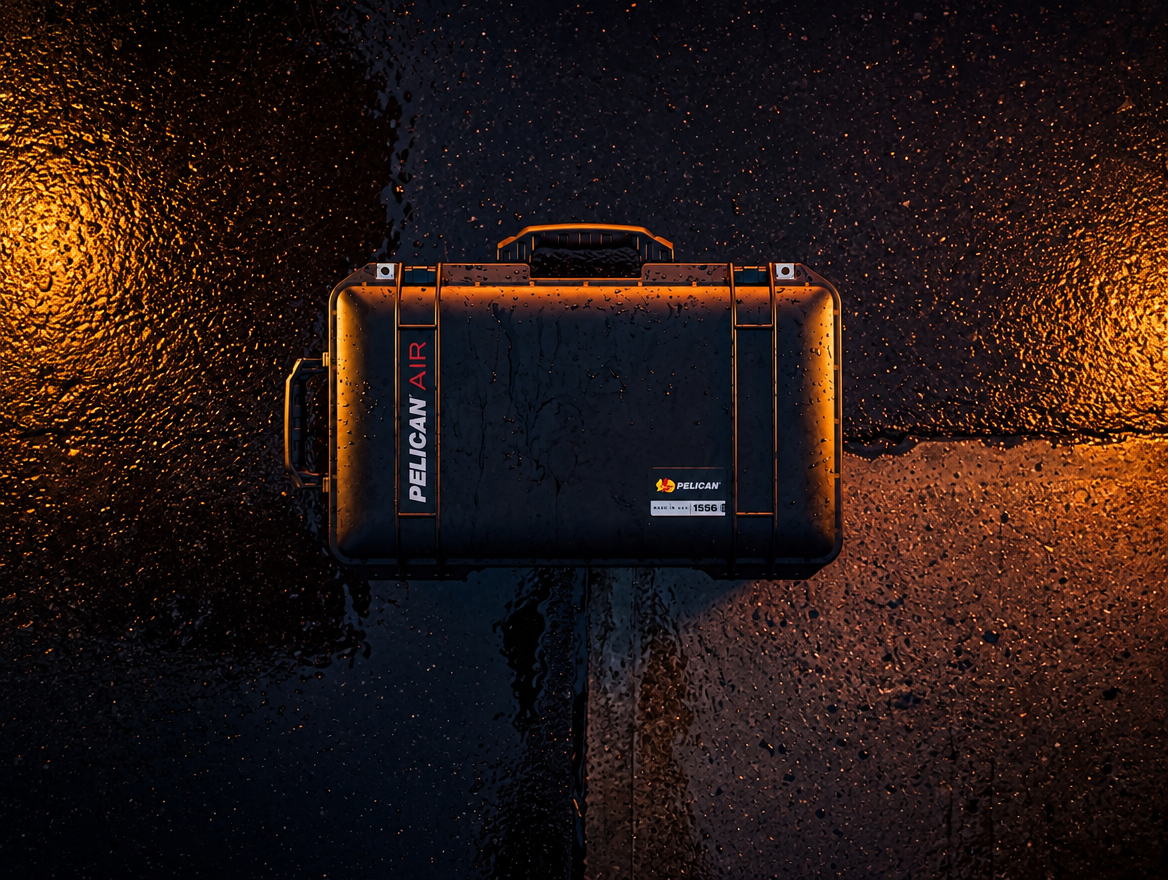
What you bring doesn't matter if you can't protect it. On storm your gear rides in truck beds, sits in flooded lots and gets tossed around staging sites. You need something tough that could withstand it all.
Why a hard case
Waterproof. A sealed, gasketed lid keeps clothes, chargers and your child support paperwork dry even if the case sits in standing water.
Crushproof. Your stuff survives being stacked under other bags, tools or equipment.
Dustproof. Debris, sawdust and mud stay out.
Lighter than older hard cases. The Air line was built to cut weight, which matters when you're hauling it in and out of hotels every few days.
Lockable. You can't lock a duffle, but you can put a nice padlock on these.
What to keep in it
A dry change of clothes and socks for the end of the shift
Chargers, battery packs and spare headlamp batteries
Paperwork: ID, union card, work orders, receipts
Meds, a basic first aid kit and toiletries
Tips
Label it with your name and phone number. Every case on a storm looks the same. You aren't the only guy with the bright idea of getting this case.
Use the padlock holes. Staging sites and hotels see a lot of foot traffic. There's always a loser that cant afford his own stuff.
Don't have a Pelican? Any gasketed hard case works. The point is waterproof and crushproof, not the brand.
Cash and Coins
Cash is king in a blackout. No power means no card readers, no ATMs and spotty cell service for tap-to-pay. You're working in the exact areas where the grid is down. Even if the power is on, comm lines could be down so you're in the same spot.
Where it saves you
Vending machines. Sometimes thats you're only savior.
Food and ice. Food trucks, small restaurants and corner stores that open early may not have working terminals.
Laundry. Plenty of laundromats still run on quarters, and after a week of storm work, clean clothes are non-negotiable.
Tips and small favors. Hotel staff, cleaning people at staging sites, locals going out of their way for your crew., and a little something for your favorite "bartender".
How to carry it
Bring small bills: $1s, $5s and $20s. Nobody can break a $100 when their register is dead.
Pack a couple rolls of quarters for laundry and vending.
Split it up. Some in your wallet, some in the truck, some in your case.
Start with a few hundred dollars and adjust for how long the deployment looks and how hard the area was hit.
LineVault
The most underrated thing to bring on storm is a record of what you're owed. After weeks of 16s, tired and hundreds of miles from home, a payroll mistake can slip right past you.
Why storm pay goes wrong
Multiple rates in one day. Straight time, time and a half and double time can all land on the same shift depending who you work for. Its important to know how much of each you get.
Per diem and meal tickets. Easy to miscount across a long deployment, and the taxable vs. non-taxable split matters.
Reimbursements. Receipts get lost, and lost receipts mean money you don't get back.
Volume. Payroll is processing hundreds of crews at once. Mistakes happen, and nobody catches them unless you do.
How to stay on top of it
Log your hours at the end of every shift, not at the end of the week. After 5 beers you won't remember Tuesday by Thursday.
Snap a photo of every receipt the day you get it.
Compare every pay stub against your log before the next one comes.
Track it all in LineVault: hours, per diem, meal tickets and reimbursements in one place, with an estimate of your gross and take-home so you know what's coming before the check hits.
An hour of double time at $120 an hour might not seem like a lot to lose when youre making $20k a check, but let it happen 4 times a year and thats almost $500 of beer money that you don't have. It adds up QUICK.
Quick checklist
Boot dryer (plus a 12V backup if power is iffy)
Extra wool or synthetic socks
Waterproof, crushproof hard case, labeled and locked
Dry change of clothes in the case
Small bills and rolls of quarters, split between wallet, truck and case
LineVault set up before you leave, so you're logging from day one